
ByJohn A
Everest from the Sky: The Complete Guide to Nepal’s Luxury Mountain Flight Experience
See Everest Without Spending Weeks on the Trail
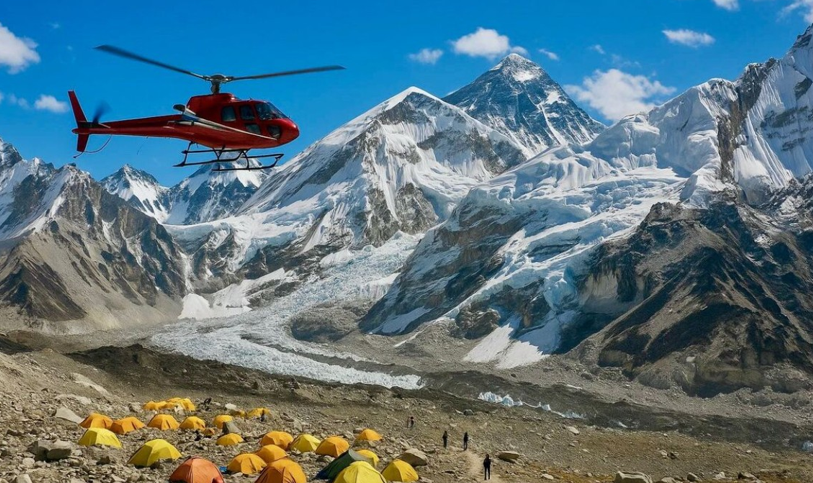
Not everyone who wants to see Everest has two or three weeks free, the trekking fitness to walk for days at altitude, or the interest in sleeping in unheated teahouses along the way. That’s the gap an Everest Base Camp helicopter tour fills. Instead of trekking through the Khumbu for one to two weeks, travelers can fly from Kathmandu into the Everest region, take in the Himalayan skyline from the air, and be back in the city the same day.
This guide covers what a helicopter tour in Nepal actually involves: the typical route and flight experience, how landing options work, when to fly for the best chance of clear views, what the trip tends to cost, and the safety and weather factors that shape every itinerary. It also looks at how to evaluate a Nepal helicopter service before booking, since not every operator structures its trips the same way.
An Everest helicopter tour is not a substitute for trekking to Everest Base Camp — it’s a different kind of trip, built around speed and aerial perspective rather than immersion and gradual acclimatization. Which one suits you depends on your time, budget, and what you actually want from the experience.
Everest Helicopter Tour at a Glance: What Travelers Should Expect
| Feature | What to Expect |
| Main destination | Everest region / Everest Base Camp area |
| Starting point | Kathmandu, depending on itinerary |
| Main purpose | Mountain sightseeing, with optional landing |
| Approximate duration | Varies by operator, route, and weather |
| Major views | Everest and surrounding Himalayan peaks |
| Landing possibilities | Route-dependent and weather-dependent |
| Best travel periods | Generally clearer mountain-view seasons |
| Fitness requirement | Much lower than a multi-day trek, but altitude still matters |
| Main limitation | Weather can affect flight operations |
The specifics — exact route, total flight time, and whether a landing is included — differ from one operator and itinerary to the next. Treat the table above as a starting orientation rather than a fixed itinerary, and confirm the details directly with whichever operator you’re considering.
What Makes an Everest Base Camp Helicopter Tour Different From Trekking?
Time Advantage
A standard Everest Base Camp trek typically runs well over a week once flights, acclimatization days, and the return route are factored in. A helicopter tour compresses the sightseeing portion of that journey into a single day, sometimes just a few hours in the air. For travelers with a short Nepal itinerary — a stopover, a business trip with a free day, or simply a limited vacation window — this is often the deciding factor.
Access to the Everest Region
Flying changes the nature of the experience. Rather than walking the trail ridge by ridge over many days, travelers see the same terrain compressed into a continuous aerial sequence — valleys opening up, villages appearing and receding, and the high peaks emerging in sequence. It’s a fundamentally different way of experiencing the same landscape, not a faster version of the same one.
Trekking vs Helicopter: Which Experience Fits You?
| Factor | Helicopter Tour | Everest Base Camp Trek |
| Time commitment | Short | Multi-day |
| Physical effort | Low compared with trekking | High |
| Mountain views | Aerial and landing views | Trail-level views |
| Cultural interaction | Limited | Much greater |
| Altitude exposure | Shorter | Prolonged |
| Best for | Time-limited travelers | Travelers seeking the full trek |
Neither option is objectively better. A helicopter tour suits travelers prioritizing efficiency and aerial scope; a trek suits those who want the gradual build-up, the villages, and the physical accomplishment of reaching Base Camp on foot.
What Is the Typical Everest Helicopter Tour Route?
Kathmandu to the Everest Region
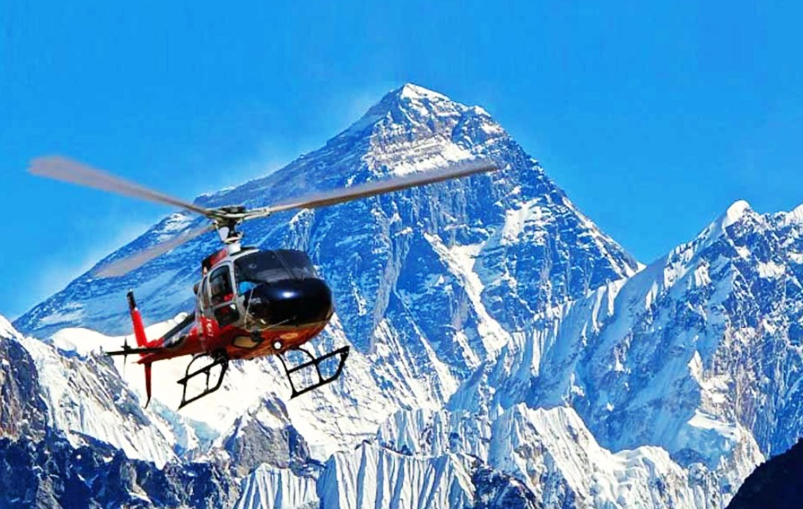
Most itineraries begin in Kathmandu, generally in the early morning when air conditions tend to be calmer. As the helicopter moves northeast toward the Khumbu, the terrain shifts from the Kathmandu Valley’s hills and terraced farmland to increasingly rugged mountain topography, with the high peaks becoming visible as the aircraft gains altitude and distance.
Key Places and Landscapes Along the Route
Depending on the specific package, a route may pass over or near:
- Kathmandu and the surrounding valley
- Lukla, the gateway airstrip for Everest region trekkers
- Namche Bazaar, the main Sherpa trading town in the Khumbu
- The Khumbu Valley and its trekking trails
- The Everest Base Camp area
- Kala Patthar, on itineraries where it’s included
- The surrounding Himalayan peaks, including Everest itself
Not every package includes every stop above — some focus purely on aerial sightseeing, while others build in a ground stop. It’s worth checking exactly which of these a given itinerary covers rather than assuming a standard route applies across all operators.
What Travelers See From the Air
From the cabin, the terrain unfolds as a mix of sharp ridgelines, glaciers, and river valleys, with Sherpa settlements and trekking trails visible below as the route climbs toward the high peaks. Everest and its neighboring giants — Lhotse, Nuptse, and others depending on the flight path — become the visual centerpiece as the helicopter approaches the upper Khumbu. Because mountain flying depends on live aviation and weather conditions, the exact path taken on any given day can vary from the general route described here.
Does the Helicopter Land at Everest Base Camp or Kala Patthar?
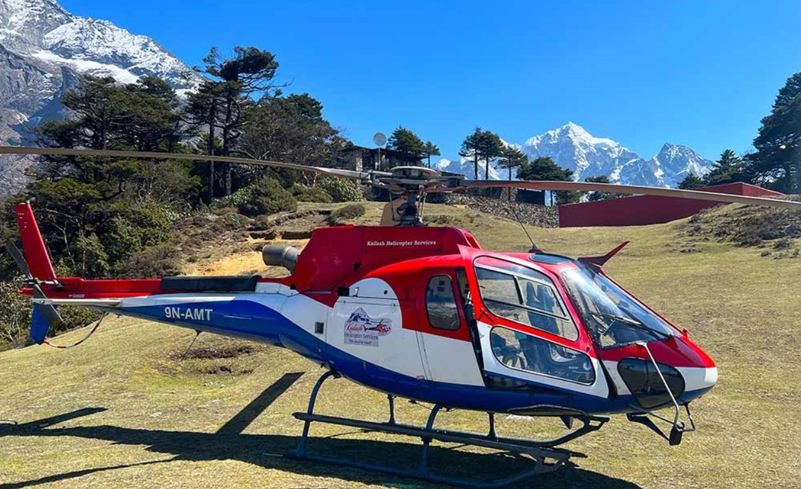
This is one of the most common questions travelers have, and the honest answer is: it depends. Landing arrangements are set by the operator’s itinerary and are further governed by weather, aviation regulations, and operational conditions on the day of the flight.
It helps to separate three distinct things that sometimes get blurred together in marketing material:
- Sightseeing over the Everest region, where the helicopter flies past the peaks without landing
- Landing near the Everest Base Camp area, offered on some itineraries when conditions allow
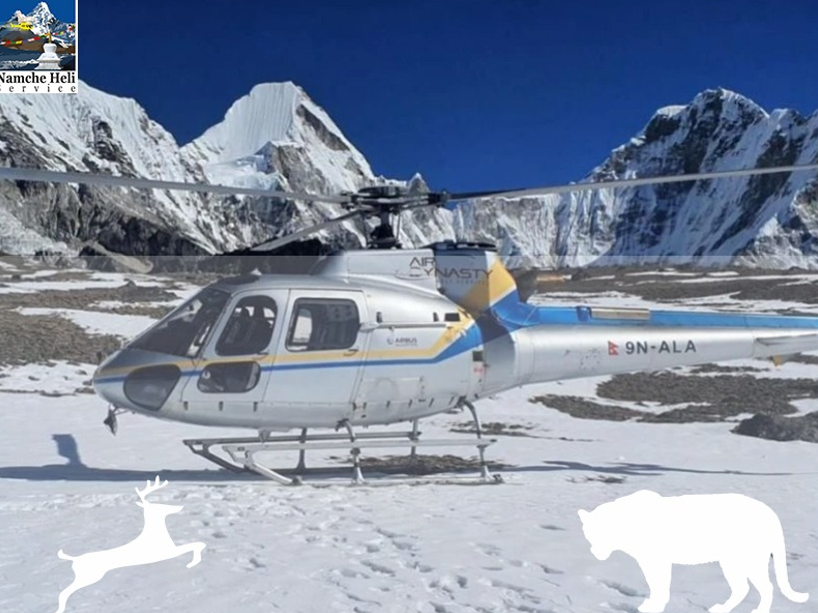
- Landing at Kala Patthar, included on certain packages when weather and operational conditions permit
A landing should never be treated as a guarantee, even when it’s listed as part of the package. High-altitude helicopter landings are sensitive to wind, visibility, and air density, and operators will reroute or skip a landing when conditions make it unsafe. Before booking, ask specifically whether a landing is included, where it takes place, and what happens if conditions don’t allow it that day.
Best Time for a Helicopter Tour in Nepal
Helicopter Tour in Nepal inSpring (roughly March to May) and autumn (roughly late September to November) are generally considered the more favorable periods for both trekking and helicopter sightseeing in Nepal. These windows tend to bring more stable weather patterns, which matters more for a helicopter tour than temperature alone — a warm day with heavy cloud cover can still ruin visibility, while a cooler but clear day offers a far better view of the mountains.
The monsoon season, roughly June through August, brings persistent cloud, rain, and reduced visibility that make helicopter sightseeing considerably less reliable. Winter months can offer clear skies but also bring cold temperatures, stronger winds, and occasional weather systems that ground flights for days at a time.
Even within the more favorable spring and autumn windows, Himalayan weather is known for changing quickly and without much warning. A clear morning doesn’t guarantee a clear afternoon, and vice versa. For this reason, travelers booking a helicopter tour should try to keep some flexibility in their Kathmandu schedule, particularly if the flight is scheduled toward the end of a trip with little room for rescheduling.
How Much Does an Everest Helicopter Tour Cost?
Prices for an Everest helicopter tour vary considerably rather than following one fixed rate, and several factors influence the final cost:
- Private versus shared (per-seat) flight
- Group size
- The specific itinerary and route
- Whether a landing is included
- The operator
- Season and demand
- Airport and operational charges
- What’s included versus excluded in the quoted price
A low advertised price doesn’t always reflect what you’ll actually pay. Some quotes cover only the flight itself, while others bundle in ground transfers, permits or applicable fees, landing charges, meals, and taxes. Before booking, it’s worth asking directly whether the quoted figure includes airport-related charges and any additional fees that might be added later.
Comparing operators is also part of choosing a dependable Nepal helicopter service — pricing that looks unusually low compared to competitors is worth scrutinizing rather than assuming it’s simply a better deal. Namcheheli is one example of a company travelers may come across while researching and comparing helicopter services in this market, alongside a number of other operators running similar routes.
See also: Your Advocate After an Accident: Why Choose Solomon Law SC
Safety, Altitude and Weather: What You Should Know Before Flying
Weather and Flight Decisions
Mountain aviation in the Himalayas is highly weather-dependent. Wind, cloud cover, and visibility can change quickly at altitude, and operators may delay, reroute, or cancel a flight for safety reasons even when the forecast looked favorable the day before.
Altitude Exposure
A helicopter tour involves far less sustained physical exertion than trekking, since there’s no multi-day climb with gradual acclimatization. That said, a landing near Base Camp or Kala Patthar still places travelers at high elevation for a short period, and altitude can affect people differently regardless of how they arrived there. It’s worth listening closely to crew instructions during a landing and treating the flight as something that carries some inherent risk, not as a completely risk-free alternative to trekking.
Choosing a Responsible Operator
When evaluating a company, look for:
- Appropriate aviation authorization for commercial mountain flights
- An experienced operating team
- A clearly defined itinerary, including what is and isn’t included
- A transparent cancellation and weather policy
- Realistic communication about whether a landing is likely, rather than guaranteed
Specific certifications or safety records shouldn’t be assumed — ask the operator directly rather than relying on marketing claims.
How to Choose the Right Nepal Helicopter Service
Compare These Before Booking
- The exact route and stops included
- Total flight duration
- Landing locations, if any
- Shared versus private arrangement
- Passenger and weight considerations
- Weather cancellation policy
- Refund and rescheduling terms
- What transfers and fees are included
- How the operator communicates before departure
Red Flags
Be cautious of operators showing any of the following: unclear or shifting pricing, guaranteed landing claims regardless of weather, vague descriptions of what’s included, pressure to book immediately, or unrealistic promises about mountain visibility on a specific day. A professional operator will generally prioritize safe operations over rigidly completing the advertised itinerary, and should be upfront that weather can change the plan.
Who Should Choose an Everest Helicopter Tour?
A helicopter tour tends to suit visitors with limited time in Nepal, travelers who are unable or unwilling to take on a long trek, families wanting a shorter mountain experience, older travelers looking to reduce physical demands, photographers and mountain-view enthusiasts, and even trekkers who want an aerial perspective to complement time already spent on the trail.
Trekking remains the better fit for travelers who want gradual acclimatization, meaningful time in Sherpa villages and communities, the full multi-day trail experience, and those who see the journey itself — not just the destination — as the point of the trip.
What to Pack for an Everest Helicopter Tour
Since the trip doesn’t require a full trekking kit, packing stays simple: warm layers for cold cabin and high-altitude air, sunglasses, sun protection, comfortable footwear, water, any personal medication, a camera or phone for photos, and identification along with your booking confirmation. Mountain weather can shift quickly, so it’s worth following your specific operator’s packing guidance rather than relying on general assumptions.
Practical Booking Tips for a Smoother Experience
Book with some flexibility built in for weather delays, confirm the exact itinerary and whether a landing is included, verify the total price against what’s excluded, understand the operator’s cancellation and rescheduling rules, arrive at the departure point with time to spare, and go in with realistic expectations about mountain visibility on any given day.
Frequently Asked Questions About Everest Helicopter Tours
Is the Everest Base Camp helicopter tour worth it?
It depends on your time, physical ability, and budget. For travelers short on time or unable to trek, it offers meaningful aerial access to the Everest region; for those wanting immersion and trail-level experience, trekking may be more worthwhile.
How long does an Everest helicopter tour take?
Duration varies based on the specific route, aircraft operations, whether a landing is included, and weather conditions on the day, so it’s best confirmed directly with the operator.
Can you land at Everest Base Camp by helicopter?
Some itineraries include a landing near the Base Camp area, but this depends on the operator, weather, and operational conditions — it should be confirmed before booking rather than assumed.
Is a helicopter tour safer than trekking?
The two involve different types of risk rather than one being straightforwardly safer. Trekking carries prolonged altitude exposure and physical strain, while helicopter operations depend heavily on weather and real-time aviation decisions.
What happens if the weather is bad?
Operators may delay, change the route, reschedule, or cancel the flight for safety reasons. Policies on rescheduling and refunds vary, so it’s worth checking this before booking.
Is a helicopter tour in Nepal suitable for people who cannot trek?
It can significantly reduce the physical demands compared to a multi-day trek, though travelers should still account for altitude exposure during any landing and consider their own medical or personal limitations.
Final Takeaway: Is an Everest Helicopter Tour Right for You?
The choice comes down to what you’re optimizing for. A helicopter tour offers speed, aerial views of the Khumbu, and a much lighter physical commitment; trekking offers immersion, gradual acclimatization, and the full Himalayan trail experience on foot. Weather, the specific itinerary, and how an operator handles both matter far more to your actual experience than any marketing promise. Whichever route you choose, understanding how an Everest helicopter tour actually works puts you in a better position to plan the trip that fits your time, budget, and goals.
Contact Details
Namche Heli Service
Namche Bazzar, Solukhumbu, Nepal
(Branch Office :Kathmandu Naya Bazar)
Phone +977-985-2850192 (WhatsApp)
Email: info@namcheheli.com
URL: www.namcheheli.com
