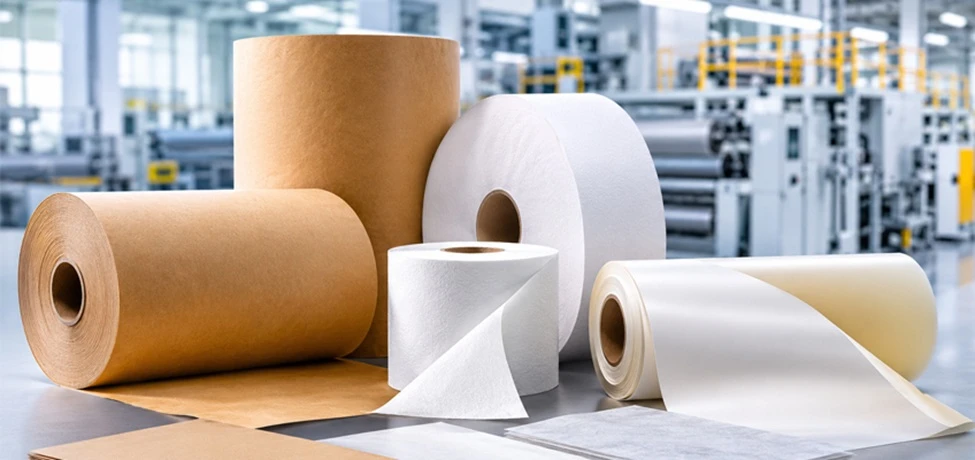

Specialty paper products are used across many industries, including packaging, printing, retail, food service, and product presentation. Unlike standard paper, these products are developed for specific purposes and may require particular thicknesses, textures, finishes, strength levels, or printing features. Their quality depends on several stages, from selecting suitable raw materials to converting, finishing, and inspecting the final product.
Understanding the specialty paper manufacturing process helps businesses recognize why material selection, production methods, and quality control are important. Each stage contributes to the paper’s appearance, performance, and consistency.
What Are Specialty Paper Products?
Specialty paper products are papers manufactured to meet specific functional or visual requirements. They can be designed for durability, flexibility, print quality, moisture resistance, or a particular surface appearance.
Common examples include:
- Decorative and printed paper
- Packaging and wrapping paper
- Coated specialty paper
- Filter paper
- Textured paper
- Labels and specialty printing sheets
- Paper components used in customized products
The exact properties depend on the intended application. For example, packaging paper may require strength and durability, while printed paper may need a smooth surface that supports clear and consistent graphics.
Selecting the Right Paper Materials
Material selection is one of the first decisions in specialty paper production. Manufacturers consider the intended use, required performance, production method, and expected finish before choosing the paper’s composition.
Paper Fiber Selection
Paper is commonly produced using natural fibers obtained from wood pulp or recycled paper. Different fiber types can influence strength, flexibility, smoothness, and overall paper quality.
Longer fibers can contribute to strength, while shorter fibers may help create a smoother surface. The right combination depends on the product’s requirements.
Choosing Paper Weight
Paper weight is another important consideration. It is commonly measured in grams per square meter (GSM), which indicates how much a square meter of paper weighs.
Different applications require different weights. Lightweight paper may be suitable for flexible applications, while heavier paper may be preferred when additional structure or durability is needed.
Surface Characteristics
The paper’s surface also affects its final performance. Manufacturers may select smooth, textured, coated, or uncoated materials depending on the intended result.
A suitable surface can improve print appearance, support finishing processes, and help the final product meet its functional requirements.
Understanding the Specialty Paper Manufacturing Process
Manufacturing specialty paper involves several connected stages. Each stage must be managed carefully to produce material with consistent characteristics.
1. Pulp Preparation
The process generally begins with preparing the paper pulp. Raw fibers are processed and mixed with water to create a uniform pulp mixture.
Depending on the required paper properties, manufacturers may adjust fiber combinations and other production variables. Consistent pulp preparation helps establish the foundation for the finished paper.
2. Sheet Formation
After preparation, the pulp is distributed across a forming surface. Water is removed as the fibers begin to bond together, creating a continuous paper sheet.
Uniform distribution is important because uneven formation can affect thickness, strength, and surface quality.
3. Pressing and Drying
The newly formed sheet contains moisture that must be reduced. Pressing removes excess water, while drying helps bring the paper to the required moisture level.
These stages influence the paper’s final structure and handling characteristics. Manufacturers monitor the process to avoid unwanted variations.
4. Surface Treatment and Finishing
Some specialty papers require additional treatments to achieve specific characteristics. These may include coating, smoothing, calendaring, or other finishing processes.
For example, a smoother surface may improve printing results, while a particular finish may provide a distinct visual appearance.
5. Cutting and Converting
Once the paper reaches the required specifications, it can be cut into sheets, rolls, or other formats.
Converting operations may also include folding, shaping, printing, or preparing paper components for further manufacturing. The selected method depends on the final product design.
Printing and Customization Techniques
Printing is an important part of many specialty paper applications. It allows manufacturers and businesses to add visual information, branding, patterns, or product details.
Different printing methods are suitable for different materials and production requirements.
Flexographic Printing
Flexographic printing uses flexible printing plates to transfer ink onto a surface. It is commonly used for packaging materials, labels, and products requiring repeat printing.
It can be suitable for large production runs where consistent output is important.
Offset Printing
Offset printing transfers an image from a plate to a rubber blanket before applying it to paper. It is frequently used when detailed graphics and consistent color reproduction are required.
The method is often selected for printed materials produced in larger quantities.
Digital Printing
Digital printing transfers artwork directly from a digital file. It can be useful for shorter production runs, customized designs, and projects that require changes between print batches.
The most suitable printing method depends on the paper surface, design complexity, order quantity, and required finish.
See also: Why Small Businesses Need a Web-Based Inventory Management System
The Role of Product Design in Specialty Paper Manufacturing
Product design determines how the finished paper will look, feel, and function. Manufacturers must consider both appearance and practical performance when developing a product.
For example, a packaging design may need to balance visual appeal with strength and ease of handling. A printed paper component may require accurate dimensions and a surface that supports clear graphics.
Businesses exploring flavored pre-rolled cones should also understand that specialty paper products can involve different construction and design requirements depending on their intended application. Material suitability and applicable safety standards must always be evaluated for the specific end use.
Important Design Considerations
Several factors influence the development of a specialty paper product:
- Dimensions: The product must meet the required length, width, and shape.
- Material strength: The paper should perform appropriately during handling and use.
- Surface finish: Texture and smoothness influence appearance and printing.
- Printing compatibility: The selected paper should work with the intended printing process.
- Consistency: Finished products should maintain reliable specifications across production batches.
Considering these elements early can help reduce manufacturing problems and improve the final result.
Quality Testing and Inspection
Quality control is necessary throughout specialty paper manufacturing. A product may look acceptable but still have problems that affect its performance.
Manufacturers use different inspection methods to identify variations and confirm that materials meet their specifications.
Thickness and Weight Testing
Paper thickness and weight are measured to check whether the material meets the required specifications. Significant differences can affect the product’s structure and usability.
Strength and Durability Testing
Depending on the application, paper may be tested for tensile strength, tear resistance, folding performance, or other physical properties.
These tests help determine whether the material can withstand the conditions expected during handling and use.
Surface and Print Inspection
Visual inspections can identify defects such as uneven coating, marks, wrinkles, inconsistent texture, or printing errors.
For printed products, manufacturers may also examine color consistency, image alignment, and overall print quality.
Batch Consistency
Comparing samples from different production batches helps manufacturers identify unwanted variations. Maintaining consistent specifications is particularly important for businesses that order products regularly.
Why Manufacturing Consistency Matters
Consistency affects product quality, customer satisfaction, and business operations. When paper products vary significantly between batches, businesses may experience difficulties with packaging, printing, storage, or product presentation.
A structured production process helps manufacturers maintain reliable results. Clear material specifications, controlled production settings, regular inspections, and documented quality procedures all contribute to consistency.
Businesses evaluating suppliers such as King Custom Cones should consider material specifications, production capabilities, customization options, and quality control practices rather than relying only on product appearance.
Sustainable Practices in Specialty Paper Production
Sustainability is an increasingly important consideration in paper manufacturing. Businesses and manufacturers may evaluate how materials are sourced, how much waste is generated, and how efficiently resources are used.
Some common approaches include:
- Using responsibly sourced paper fibers
- Incorporating suitable recycled materials
- Reducing water consumption during production
- Improving energy efficiency
- Reusing production waste where practical
- Selecting packaging that reduces unnecessary material use
Sustainable production depends on the materials, manufacturing processes, and requirements of the final product. Manufacturers should assess environmental claims carefully and support them with appropriate documentation.
Final Thoughts
Specialty paper manufacturing involves more than simply producing a sheet of paper. It requires careful material selection, controlled production, suitable finishing techniques, and consistent quality testing.
From pulp preparation and sheet formation to printing and final inspection, every stage contributes to the finished product. Understanding these processes helps businesses make more informed decisions when selecting specialty paper materials and manufacturing partners.