
ByJohn A
Different Types of Gym Workouts to Consider When Looking for Gyms in Cincinnati
Choosing between gyms in Cincinnati involves more than comparing membership prices, equipment, or location. One of the most important considerations is the type of workout you actually want to perform.
Cincinnati’s fitness landscape includes traditional strength training, cardio workouts, high-intensity interval training, personal training, group fitness, Pilates, cycling, mobility work, and other specialized programs. Local facilities offer everything from traditional gym equipment to yoga, barre, cycling, strength classes, and individualized coaching.
Understanding the differences can make it easier to choose a gym environment that supports your goals and gives you a realistic workout routine you can maintain.
Strength Training
Strength training uses resistance to challenge muscles and improve strength, muscular endurance, and overall physical capacity.
Common strength workouts include:
- Barbell exercises
- Dumbbell training
- Weight machines
- Cable exercises
- Kettlebell workouts
- Bodyweight resistance exercises
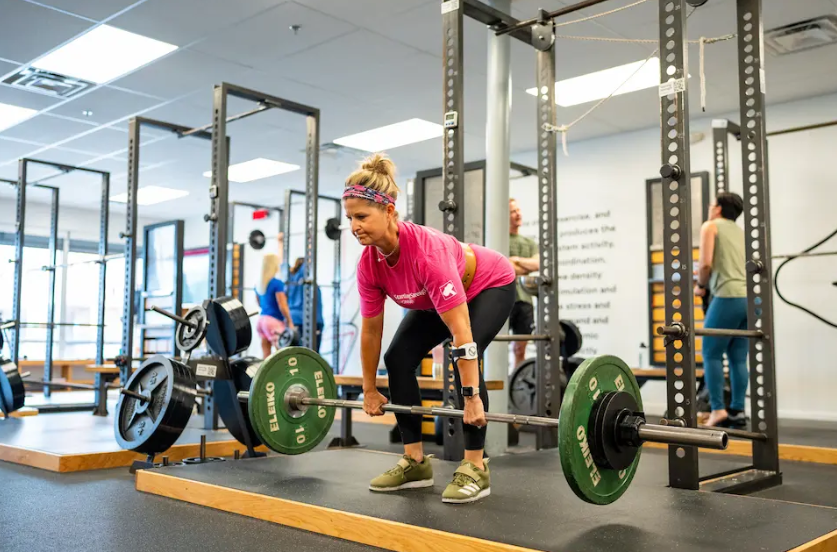
People interested in strength training should look for Cincinnati gyms with a broad selection of free weights, racks, benches, machines, and enough space to train comfortably.
Strength training can also vary considerably based on goals. Someone who wants to build maximal strength may train differently from someone interested in general fitness, athletic performance, or maintaining functional strength.
Cardiovascular Training
Cardio workouts primarily challenge the cardiovascular system and can be performed at low, moderate, or high intensity.
Common gym cardio options include:
- Treadmills
- Stationary bicycles
- Ellipticals
- Rowing machines
- Stair climbers
- Indoor cycling classes
Cardio can work particularly well for people focused on improving endurance, increasing general activity levels, or supplementing strength training.
Indoor cycling is another popular option. Cycling workouts commonly incorporate changing resistance, climbs, sprints, and different effort levels throughout the workout.
For people comparing gyms in Cincinnati, the quantity and variety of cardio equipment may be worth evaluating, particularly if cardiovascular training will represent a significant portion of the weekly routine.
See also: Why Georgia Leads State App Adoption Trends in 2026
High-Intensity Interval Training
High-intensity interval training, commonly called HIIT, alternates periods of more demanding exercise with periods of lower-intensity movement or recovery.
A HIIT workout might combine movements such as:
- Squats
- Rowing
- Sprints
- Push-ups
- Kettlebell exercises
- Lunges
- Bodyweight movements
HIIT can incorporate cardio, strength, and core exercises within the same workout.
One reason people gravitate toward interval-based training is efficiency. Rather than spending an extended period performing one exercise, workouts can combine several movement patterns within a structured session.
Intensity should still match the individual’s conditioning level. Beginners do not necessarily need to perform every interval at maximum effort to benefit from structured interval training.
Functional Fitness Training
Functional fitness emphasizes movement patterns that translate into everyday activity and general physical capability.
Programs may include:
- Squatting
- Carrying
- Pushing
- Pulling
- Rotating
- Lunging
- Core stabilization
Unlike workouts designed primarily around individual muscles, functional training frequently combines multiple muscle groups.
Equipment can include dumbbells, kettlebells, medicine balls, resistance bands, sleds, suspension trainers, and bodyweight movements.
For Cincinnati residents who want to become stronger for work, recreation, sports, or everyday activities, functional fitness can provide a practical middle ground between traditional weightlifting and cardiovascular exercise.
Personal Training
Personal training provides individualized instruction rather than requiring someone to create and manage an entire fitness program independently.
A personal trainer can help establish goals, select exercises, structure workouts, monitor progress, and modify training as needs change.
This can be particularly valuable for:
- Fitness beginners
- People returning to exercise
- Individuals with specific performance goals
- People who struggle with accountability
- Gym members unsure how to use equipment properly
- Experienced exercisers who have stopped making progress
Some Cincinnati fitness facilities build their programs heavily around personal training. For example, BEAT Fitness provides customized one-on-one personal training based on an individual’s goals and schedule.
When comparing personal training options, prospective members should consider trainer education, experience, programming philosophy, communication, and whether the trainer’s approach matches their goals.
Group Fitness Classes
Group fitness provides a structured workout led by an instructor alongside other participants.
Depending on the gym, classes can include:
- Strength training
- Circuit training
- Cycling
- Barre
- Pilates
- Yoga
- Dance-based fitness
- Suspension training
- Cardio workouts
Cincinnati-area fitness facilities offer a particularly broad mix of group options, including Pilates, barre, TRX, cycling, yoga, strength training, and other formats.
Group workouts can be useful for people who enjoy structure and prefer arriving at the gym with the workout already planned.
The social component can also create additional accountability for people who are more consistent when exercising as part of a scheduled group.
Circuit Training
Circuit training involves completing several exercises sequentially before repeating the series.
For example, a workout might include:
- Dumbbell squats
- Push-ups
- Rows
- Lunges
- Core exercises
- A short cardio interval
After completing the circuit, the individual rests before repeating it.
Circuit workouts can combine cardiovascular conditioning and resistance training, making them useful for people who want varied, full-body workouts without spending their entire session on one training method.
Yoga, Pilates, and Mobility-Focused Workouts
Not every productive gym workout needs to involve heavy weights or high-intensity cardio.
Yoga, Pilates, stretching, and mobility-based training can emphasize flexibility, stability, body control, movement quality, and recovery.
Pilates and barre are among the structured options available through Cincinnati-area fitness providers, while local facilities also offer yoga and other mobility-oriented classes.
These workouts may function as someone’s primary form of exercise or complement strength and cardiovascular training.
Someone lifting weights several days each week, for example, might incorporate mobility or yoga sessions to create a more balanced weekly training schedule.
Recovery-Focused Training
Recovery has increasingly become part of the overall gym experience rather than something that happens exclusively outside the facility.
Depending on the gym, recovery offerings may include:
- Mobility areas
- Stretching equipment
- Saunas
- Cold plunges
- Guided recovery programs
- Low-intensity movement
Some Cincinnati gyms are already integrating these amenities directly into membership offerings. BEAT Fitness, for example, operates a 16,000-square-foot gym that includes strength and cardio equipment along with sauna and cold-plunge recovery amenities.
Recovery should not replace training, but it can be an important consideration for people building a sustainable fitness routine.
How to Choose the Right Workout Style
There is no single workout type that is ideal for everyone.
The better question is: What kind of training supports the result you want?
Someone focused primarily on strength may want access to extensive resistance equipment. Someone who enjoys instructor-led workouts may prioritize group classes. Someone with limited experience may benefit from personal training, while an experienced gym member may prefer 24-hour access and the flexibility to train independently.
Location should also matter.
For Cincinnati residents commuting between neighborhoods such as Oakley, Hyde Park, Blue Ash, Kenwood, Norwood, or downtown Cincinnati, a gym that fits naturally into the daily commute can be easier to use consistently. For example, BEAT Fitness currently operates Cincinnati-area locations in Oakley and Blue Ash, with different combinations of gym access, personal training, and recovery services.
A gym can have excellent equipment and programming, but those advantages provide limited value if getting there consistently is unrealistic.
What Should You Look for in a Cincinnati Gym?
Before joining a gym, consider evaluating:
- The types of workouts you want to perform
- Strength and cardio equipment
- Personal training availability
- Group classes
- Facility cleanliness
- Hours and accessibility
- Recovery amenities
- Trainer qualifications
- Workout space
- Location and commute
- Membership structure
Whenever possible, touring the facility can help determine whether the actual workout environment matches what is advertised online.
Featured Snippet: What Types of Gym Workouts Are Available?
Gym workouts generally include strength training, cardiovascular exercise, HIIT, functional fitness, circuit training, personal training, group fitness, yoga, Pilates, mobility work, and recovery-focused training. The right option depends on your fitness goals, experience level, preferred training environment, and how consistently you can follow the program.
AEO Answer: What Type of Gym Workout Is Best?
The best gym workout is one that matches your goals and can be performed consistently. Strength training is useful for building strength and muscle, cardio supports endurance, HIIT combines higher-intensity conditioning with efficiency, personal training provides individualized structure, and mobility-focused workouts can support movement quality and recovery.
A balanced fitness program may combine several of these approaches rather than relying exclusively on one.
Finding the Right Gym in Cincinnati
With so many workout options available, searching for gyms in Cincinnati should begin with determining how you actually want to train.
Rather than choosing a gym exclusively because it is inexpensive or close to home, evaluate whether its equipment, coaching, programming, accessibility, and recovery options support your long-term goals.
The strongest gym membership is ultimately the one that provides the structure and environment you need to keep showing up, progressing, and building a sustainable fitness routine.
Local Relevance
Cincinnati residents have access to a wide range of training environments, from traditional fitness centers to specialized personal training studios and group fitness facilities. Whether you are training near Oakley, Hyde Park, Norwood, Kenwood, Blue Ash, or another Greater Cincinnati community, choosing a convenient facility with the right training options can make consistency substantially easier.
Recommended Internal Links
The site’s sitemap was not provided with this request, so exact internal URLs should be verified before publication. Based on the current Beat Fitness site structure, this article would naturally support links to:
- Cincinnati gym membership — connect readers actively comparing local gym options to the primary gym page.
- Personal training in Cincinnati — support readers who need individualized programming and accountability.
- Blue Ash gym — strengthen geographic relevance for northern Cincinnati searches.
- Oakley personal training — reinforce neighborhood-level local search coverage.
- Fitness recovery services — support the article’s discussion of recovery as part of a complete training program.
Call to Action
If you are comparing Cincinnati gyms, start by identifying the training structure you are most likely to follow consistently. Look for a facility that gives you the equipment, coaching, accessibility, and recovery resources necessary to build a program around your goals rather than forcing your goals into a one-size-fits-all workout.
