Byadmin
How to Reduce Bloating After Eating
Feeling bloated after eating is a common experience that affects people of all ages. While occasional bloating is usually harmless, it can be uncomfortable and interfere with daily activities. Fortunately, simple dietary adjustments, healthier eating habits, and lifestyle changes can significantly reduce bloating and improve digestive comfort.
This guide explains why bloating happens, how to reduce it quickly, and what you can do to prevent it in the future using evidence-based strategies.
What Is Bloating?
Bloating is the sensation of fullness, tightness, or swelling in the abdomen. It often occurs because of excess gas in the digestive tract, slow digestion, or temporary fluid retention.
Common symptoms include:
- A swollen or distended abdomen
- Feeling overly full after eating
- Burping or passing gas
- Mild abdominal discomfort
- Rumbling or gurgling sounds
Occasional bloating is normal, especially after large meals. However, frequent or severe bloating may indicate an underlying digestive condition.
Common Causes of Bloating After Eating
Understanding the cause is the first step toward finding the right solution.
1. Eating Too Quickly
When you eat rapidly, you swallow more air. This trapped air can build up in your digestive tract and cause bloating.
2. Overeating
Large meals stretch the stomach and slow digestion, making you feel uncomfortably full.
3. Gas-Producing Foods
Certain foods naturally produce more gas during digestion, including:
- Beans and lentils
- Broccoli
- Cauliflower
- Cabbage
- Brussels sprouts
- Onions
These foods are nutritious but may cause temporary bloating in some people.
4. Carbonated Drinks
Soft drinks, sparkling water, and other fizzy beverages introduce carbon dioxide into your digestive system, increasing gas.
5. Food Intolerances
Some individuals have difficulty digesting specific foods, such as:
- Lactose in dairy products
- Fructose in certain fruits
- Gluten in people with celiac disease
- High-FODMAP foods in those with sensitive digestive systems
6. Constipation
When stool remains in the colon, gas becomes trapped, leading to abdominal fullness and bloating.
7. Hormonal Changes
Many women experience bloating before or during menstruation due to temporary fluid retention and hormonal fluctuations.
Quick Ways to Reduce Bloating After Eating
If you’re already feeling bloated, these strategies may help provide relief.
Take a Gentle Walk
A 10–20-minute walk stimulates intestinal movement and helps move trapped gas through the digestive tract.
Even light physical activity after meals supports digestion better than lying down immediately.
Drink Warm Water
Warm water can encourage digestion and help food move more efficiently through your digestive system.
Staying hydrated also helps prevent constipation, a common contributor to bloating.
Try Peppermint Tea
Peppermint may help relax digestive muscles and ease gas-related discomfort in some people.
People with frequent acid reflux should use peppermint cautiously because it can worsen symptoms.
Practice Deep Breathing
Stress can affect digestion by slowing stomach emptying and increasing muscle tension.
A few minutes of slow breathing may help your digestive system relax.
Avoid Lying Down Immediately
Wait at least two to three hours after eating before lying flat.
Remaining upright supports normal digestion and reduces the likelihood of both bloating and acid reflux.
Massage Your Abdomen
Gentle clockwise abdominal massage may encourage gas movement through the intestines and provide temporary relief.
Foods That May Help Reduce Bloating
Certain foods naturally support healthy digestion.
Ginger
Ginger has long been used to reduce nausea and may help improve stomach emptying, potentially reducing bloating after meals.
Ways to enjoy ginger include:
- Fresh ginger tea
- Grated ginger in meals
- Ginger added to smoothies
Yogurt with Live Cultures
Some yogurts contain beneficial bacteria that support a healthy gut microbiome.
People who are lactose intolerant should choose lactose-free yogurt or fermented dairy products if tolerated.
Bananas
Bananas provide potassium, which helps regulate sodium balance and may reduce water retention.
Kiwi
Research suggests kiwi may support healthy digestion and regular bowel movements because it contains fiber and digestive enzymes.
Oats
Whole oats contain soluble fiber that supports digestive health while helping maintain regular bowel function.
Increase fiber gradually and drink plenty of water to avoid worsening bloating.
Cucumbers
Cucumbers have a high water content that supports hydration and may help reduce temporary water retention.
Foods and Drinks to Limit
If bloating happens frequently, consider reducing intake of foods that commonly trigger digestive discomfort.
These include:
- Sugary soft drinks
- Artificial sweeteners like sorbitol and mannitol
- Very salty processed foods
- Large fatty meals
- Excess alcohol
- Chewing gum, which increases swallowed air
Remember that food triggers vary from person to person. Keeping a food diary can help identify your own patterns.
Healthy Eating Habits That Prevent Bloating
Small changes in eating behavior often make a noticeable difference.
Eat Slowly
Chew each bite thoroughly before swallowing.
This improves digestion and reduces swallowed air.
Eat Smaller Meals
Instead of eating two or three very large meals, try eating moderate portions throughout the day.
Smaller meals are often easier to digest.
Stay Hydrated
Adequate water intake supports digestion and helps fiber move efficiently through the intestines.
Aim to drink water consistently throughout the day rather than consuming large amounts all at once.
Increase Fiber Gradually
Fiber supports digestive health but adding too much too quickly may temporarily increase gas.
Increase fiber slowly over several weeks.
Good fiber sources include:
- Fruits
- Vegetables
- Whole grains
- Legumes
- Seeds
Identify Food Intolerances
If bloating occurs after specific foods every time, consider discussing food intolerance testing or an elimination diet with a healthcare professional.
Common triggers include dairy, wheat, onions, garlic, and certain fruits.
Can Exercise Help Reduce Bloating?
Yes. Regular physical activity promotes healthy digestion and encourages intestinal movement.
Helpful options include:
- Walking
- Cycling
- Swimming
- Yoga
- Light stretching
Even 30 minutes of moderate exercise most days of the week can improve digestive function.
Certain yoga poses, such as Child’s Pose, Knees-to-Chest Pose, and Supine Twist, may also help some people pass trapped gas more comfortably.
Does Stress Make Bloating Worse?
Yes. The digestive system and brain are closely connected through the gut-brain axis.
Chronic stress may contribute to:
- Slower digestion
- Increased intestinal sensitivity
- Changes in bowel habits
- Greater awareness of abdominal discomfort
Managing stress through mindfulness, regular exercise, adequate sleep, or relaxation techniques may improve digestive symptoms over time.
Are Probiotics Helpful?
Some studies suggest specific probiotic strains may reduce bloating in certain individuals, particularly those with irritable bowel syndrome (IBS). However, not all probiotic products work the same way, and benefits vary by strain and person.
If you are considering probiotics, discuss the most appropriate option with your healthcare provider, especially if you have persistent digestive symptoms or an underlying medical condition.
When Should You See a Doctor?
Occasional bloating is common, but medical evaluation is recommended if bloating:
- Persists for several weeks
- Occurs with severe abdominal pain
- Is accompanied by unexplained weight loss
- Causes persistent vomiting
- Includes blood in the stool
- Occurs with ongoing diarrhea or constipation
- Interferes significantly with daily life
Persistent bloating may be related to conditions such as IBS, celiac disease, inflammatory bowel disease, ovarian disorders, or other digestive conditions that require professional assessment.
Conclusion
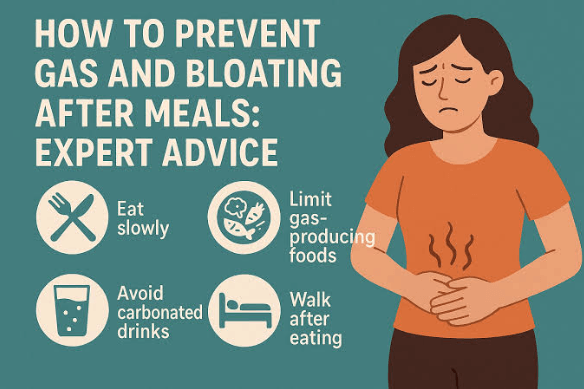
Bloating after eating is often temporary and can usually be improved with healthier eating habits, balanced nutrition, regular physical activity, and proper hydration. Eating slowly, avoiding overeating, limiting carbonated drinks, and identifying individual food triggers are among the most effective strategies for reducing digestive discomfort.
If bloating becomes frequent, severe, or is accompanied by concerning symptoms, seeking medical advice is important to identify any underlying condition and receive appropriate treatment.
By making gradual lifestyle changes and paying attention to how your body responds to different foods, you can enjoy meals with greater comfort and support long-term digestive health.
Frequently Asked Questions
1. What is the fastest way to reduce bloating after eating?
A short walk, drinking water, avoiding lying down, and allowing time for digestion are among the quickest ways to relieve mild bloating.
2. Which foods help reduce bloating naturally?
Ginger, bananas, kiwi, yogurt with live cultures (if tolerated), cucumbers, and oats may support healthy digestion and help reduce bloating.
3. Why do I get bloated after every meal?
Frequent bloating may result from overeating, eating too quickly, food intolerances, constipation, IBS, or other digestive conditions. Persistent symptoms should be evaluated by a healthcare professional.
4. Does drinking water reduce bloating?
Yes. Staying hydrated supports normal digestion, helps prevent constipation, and may reduce bloating caused by fluid retention.
5. Is bloating a sign of a serious medical condition?
Most cases are harmless and related to diet or digestion. However, persistent bloating accompanied by severe pain, weight loss, blood in the stool, or other concerning symptoms requires prompt medical evaluation.