ByJohn A
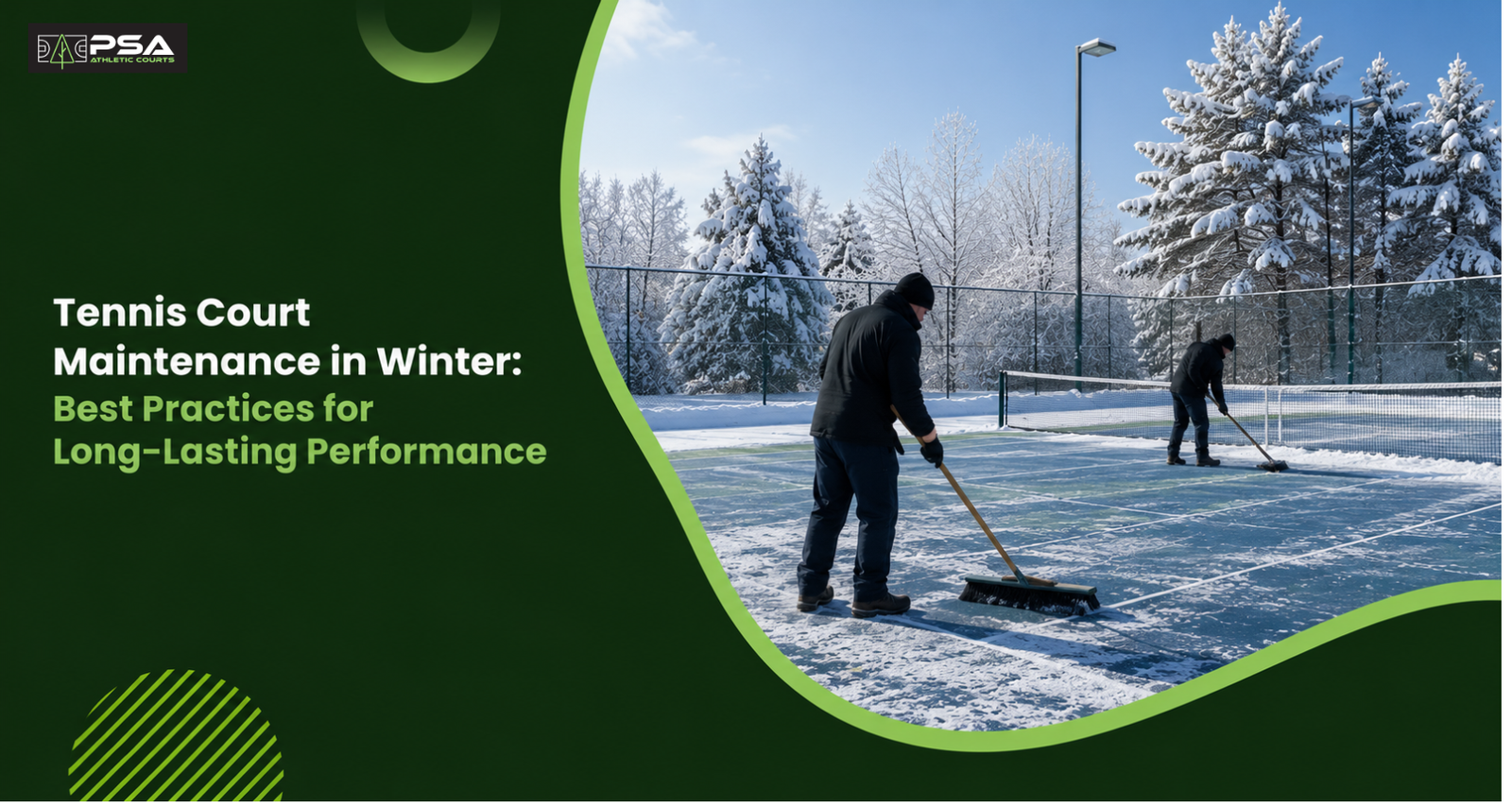
Tennis Court Maintenance in Winter: Best Practices for Long-Lasting Performance
Winter can be one of the toughest seasons for outdoor sports courts. Snow, ice, freezing temperatures, and repeated freeze-thaw cycles can damage the court surface if it isn’t properly maintained. By following a proactive tennis court maintenance routine, you can extend your court’s lifespan, reduce repair costs, and ensure it’s ready for play when warmer weather returns.
Whether you own a residential court, school facility, or community sports complex, these winter maintenance best practices will help protect your investment.
Why Winter Tennis Court Maintenance Matters
Cold weather can cause small cracks to expand, moisture to seep beneath the surface, and debris to accumulate. If left untreated, these issues can lead to expensive resurfacing or structural repairs in the spring.
Routine tennis court maintenance during winter helps:
- Prevent surface cracks from worsening
- Protect coatings from moisture damage
- Improve drainage performance
- Extend the life of the playing surface
- Reduce long-term maintenance expenses
1. Keep the Court Clean Before Snowfall
Before winter begins, remove leaves, dirt, branches, and other debris from the court surface. Organic material traps moisture, encouraging mold growth and staining.
A clean surface also makes snow removal easier and minimizes the risk of surface damage.
2. Remove Snow Carefully
Snow should be removed promptly after major storms, but the wrong tools can scratch or damage the playing surface.
Use non-metal snow shovels or soft rubber-edged snow pushers. Avoid steel blades and heavy machinery that can chip acrylic coatings.
When searching for tennis court maintenance near me, choose professionals who use court-safe snow removal methods designed specifically for sports surfaces.
3. Prevent Standing Water
Water is one of the biggest threats during winter. As temperatures fluctuate, standing water freezes and expands, placing pressure on the court surface.
Inspect the court regularly and ensure drainage systems remain clear. If puddles consistently form in the same areas, schedule repairs before the next playing season.
4. Avoid Using Harsh De-Icing Chemicals
Many commercial de-icing products contain salts and chemicals that can deteriorate acrylic coatings and affect court performance.
Instead of applying harsh chemicals, allow ice to melt naturally when possible or consult a professional maintenance company for safe ice management recommendations.
5. Inspect for Cracks Throughout Winter
Small cracks can become larger after repeated freeze-thaw cycles.
Conduct visual inspections throughout the season and look for:
- Surface cracks
- Low spots collecting water
- Fading court coatings
- Loose net posts
- Drainage issues
Addressing minor problems early prevents costly repairs later.
6. Use Proper Tennis Court Maintenance Equipment
Using the right tennis court maintenance equipment helps protect the surface while making routine care easier.
Recommended equipment includes:
- Soft-bristle push brooms
- Rubber-edged snow pushers
- Leaf blowers
- Court rollers (where appropriate)
- Water removal squeegees
- Court cleaning brushes
Using court-specific equipment reduces unnecessary wear while keeping the playing surface in excellent condition.
7. Schedule a Professional Winter Inspection
A professional inspection can identify issues that are difficult to spot during routine maintenance.
Experienced contractors evaluate:
- Surface condition
- Drainage performance
- Crack development
- Net systems
- Fence stability
- Overall court safety
Scheduling preventative maintenance during winter often helps avoid larger repair projects in spring, especially for tennis court Manchester owners dealing with harsh weather conditions.
Prepare Your Court for Every Season
Winter maintenance is only one part of protecting your investment. Regular inspections, cleaning, and timely repairs ensure your court continues delivering consistent performance year after year.
If you’re planning long-term care, contact us to schedule professional tennis court maintenance services tailored to your facility.
For more maintenance insights, explore our blog on Seasonal Tennis Court Maintenance: Summer vs. Winter Care Tips to learn how year-round care keeps your court performing at its best.
See also: Your Brain Is Exhausted. A Coin Flip Might Actually Fix That.
Conclusion
Proper tennis court maintenance during winter protects your court from weather-related damage, extends its lifespan, and reduces future repair costs. Simple practices like removing debris, preventing standing water, using the correct tennis court maintenance equipment, and scheduling professional inspections can make a significant difference.
Whether you’re maintaining a private court or managing a commercial sports facility, investing in seasonal care today ensures a safer, better-performing court when tennis season returns.